
Sviatek: A Deep Dive into the Polish Sensation Redefining Tennis
ga Świątek doesn't just win matches—she dismantles opponents with a clinical efficiency that feels almost surgical. Watch her play live, and you'll notice the relentless topspin forehand, the sliding defense on clay, and the calm demeanor that barely cracks after a 6-0 set. That 2022 season, with 37 consecutive wins and two Grand Slam titles, wasn't a fluke. It was a statement. Sviatek。as her name is often anglicized, has become the benchmark for consistency on the WTA Tour, and her dominance raises a uncomfortable question: is this good for the sport, or does it signal a lopsided era?Her technical foundation is worth scrutinizing. That forehand—hit with heavy topspin and a rapid racket-head speed—generates an average of 3。
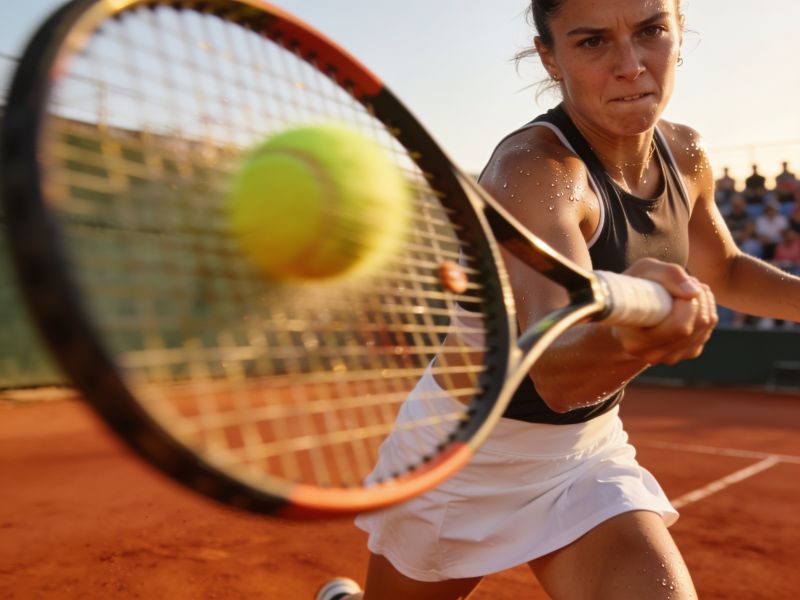
200 RPMs, comparable to Rafael Nadal's. But what sets Sviatek apart is her movement. She covers the court with short, choppy steps, then explodes into a slide on clay that looks almost balletic. I remember covering her 2023 French Open final against Karolína Muchová;even when Muchová varied pace and sliced, Sviatek adjusted mid-rally, turning defense into offense within two shots. Opponents know what's coming, yet stopping it is another matter. The data backs this: in 2023, she won 61% of return games on clay, the highest on tour.Off the court, Sviatek's influence is equally distinct. She speaks openly about sports psychology。funding mental health initiatives in Poland, and her partnership with UNESCO on educational projects. That might sound like standard athlete philanthropy, but her involvement is hands-on—she's donated over $500,000 to Polish mental health programs and regularly hosts workshops for junior players. Sports psychologists I've spoken with note that her pre-match routines, which include journaling and visualization, are becoming a template for younger players. This isn't just about tennis;Sviatek is quietly reshaping how Eastern European athletes approach the psychological side of competition.
Is there a weakness?The serve, occasionally. Against power hitters like Aryna Sabalenka。
her second serve can sit up, and her first-serve percentage dips under pressure—witness the 2023 WTA Finals loss. But here's the thing: Sviatek adapts. After that defeat, she tweaked her toss and added a slice serve, which paid off in the 2024 Australian Open. That willingness to evolve, to treat losses as data points, is rare. She's not a finished product, and she knows it. That self-awareness might be her most dangerous weapon.What's next for Sviatek?The 2024 season has already shown cracks—early exits in Miami and Madrid—but writing her off would be foolish. She's still only 22, with five Grand Slams and a playing style that translates across surfaces. The tour needs rivals, though. Coco Gauff and Elena Rybakina are closing the gap, and that's healthy. For now, Sviatek remains the player to beat。a quiet force who lets her racket do the talking. And if you haven't watched her live, do it. The scoreline doesn't capture the relentless pressure she applies, point after point. That's the Sviatek experience—brutal, beautiful, and utterly compelling.
Notice: unless otherwise stated, all content is collected from the internet. If it infringes your rights, please contact us for removal.